We've worked alongside architects who are doing the right thing: tracking projects, caring about performance, genuinely trying to understand where their buildings land on the energy spectrum — and still struggling to get a number early enough to matter. Not because they aren't committed, but because a full performance compliance model is expensive, time-consuming, and honestly not always in scope. That's especially true for teams carrying large portfolios: interiors projects, multifamily buildings, smaller commercial work where a formal energy model may never get built. And yet those projects still deserve a baseline. Those architects still deserve to walk into a schematic design meeting with something credible to anchor the conversation.
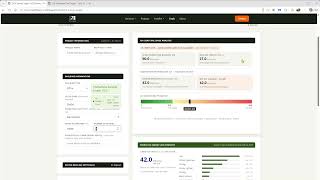
That's what this tool is for. It estimates your building's predicted Energy Use Intensity (pEUI) by drawing on results from the California Building Energy Model (CalBEM) New Construction prototype library — representative building models simulated to approximate compliance with Title 24 2025 energy code, run in EnergyPlus across all 16 California climate zones with current TMYx weather data. Enter your building type, size, and zip code, and we identify your climate zone and return the pEUI from the closest matching prototype: site EUI, source EUI, and end-use breakdowns included.
A few honest caveats: the CalBEM library doesn't have a dedicated prototype for every building type. A Library or House of Worship gets mapped to the Assembly prototype; multifamily buildings map to a single prototype that won't capture every corridor configuration or unit mix. This is an order-of-magnitude estimate — not a substitute for a project-specific model as design matures, but a real, defensible starting point you can report into the DDx as a predicted EUI and use to set a target before the big decisions get made.
We built this because we believe every architect, on every project and at every budget level, should be able to answer the question: where do we think this building's energy performance is going to fall? Use it freely, share it with your team, and treat it as one step on your own knowledge journey toward a better-performing built environment.