Title 24 2025 Highlights: Not Everything, Just the Good Stuff
California’s 2025 Energy Code (Title 24) is now in effect, and while every code cycle brings a long list of updates, we wanted to highlight a few we thought were pretty important. Not everything. Just the good stuff. For energy code experts who want to go deeper quickly, the Energy Commission has published excellent condensed two-page memos that summarize a much broader set of changes:
Nonresidential memo:
https://www.energy.ca.gov/sites/default/files/2025-03/Whats_new_for_2025_Nonresidential_ada.pdfMultifamily memo:
https://www.energy.ca.gov/sites/default/files/2025-04/Whats_New_for_2025_Multifamily_2025-04-08_ada.pdf
And if you’re a mechanical designer, especially working on laboratories or equipment-heavy buildings, Jeff Wegner has put together a great LinkedIn post highlighting additional 2025 changes that go beyond what’s covered here:
https://www.linkedin.com/posts/jpwegner_2025-title-24-code-cycle-updates-activity-7412648828346236928-t3ft
Energy Code Restructured Format
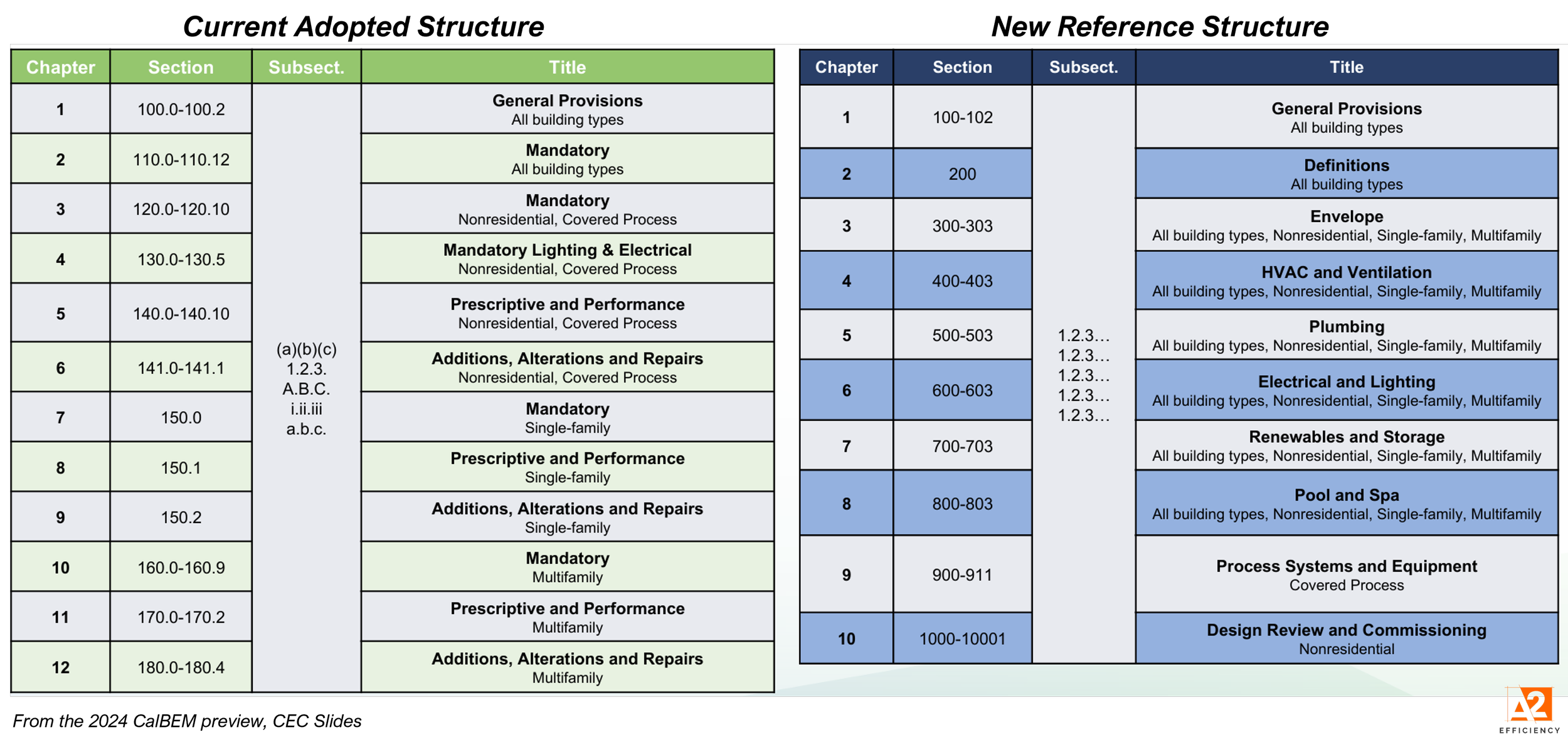
One of the most meaningful changes in the 2025 cycle isn’t a new requirement—it’s how the code is organized. A new, optional restructured format reorganizes Title 24 by building system (envelope, HVAC, lighting, plumbing, electrical), placing mandatory, prescriptive, and performance requirements together instead of scattered across chapters. While this version is not the legally adopted code, it dramatically improves usability:
Easier navigation for non–energy-code experts
Clearer visibility into system-level requirements
Faster interpretation during design and review
For anyone who has ever been asked, “Can you quickly check what the energy code says about this?”—this matters.
Embodied Carbon Documentation
For the first time, embodied carbon is formally required in California’s building code. New construction and major alterations over 50,000 square feet must now demonstrate at least a 10% reduction in embodied carbon compared to a baseline design. The focus is on:
Primary and secondary structural elements
Building enclosure components
Projects can comply through multiple pathways, including building reuse, whole-building life cycle assessment, or prescriptive material limits. This marks a clear shift: operational efficiency alone is no longer enough. Carbon impacts are now evaluated across a building’s full life cycle.
Balanced Ventilation in Multi-Family
Exhaust-only ventilation is no longer allowed in multifamily dwelling units. Under Title 24 2025, units must now use balanced or supply ventilation, paired with compartmentalization testing. This improves:
Indoor air quality
Filtration capability
Control over infiltration and energy losses
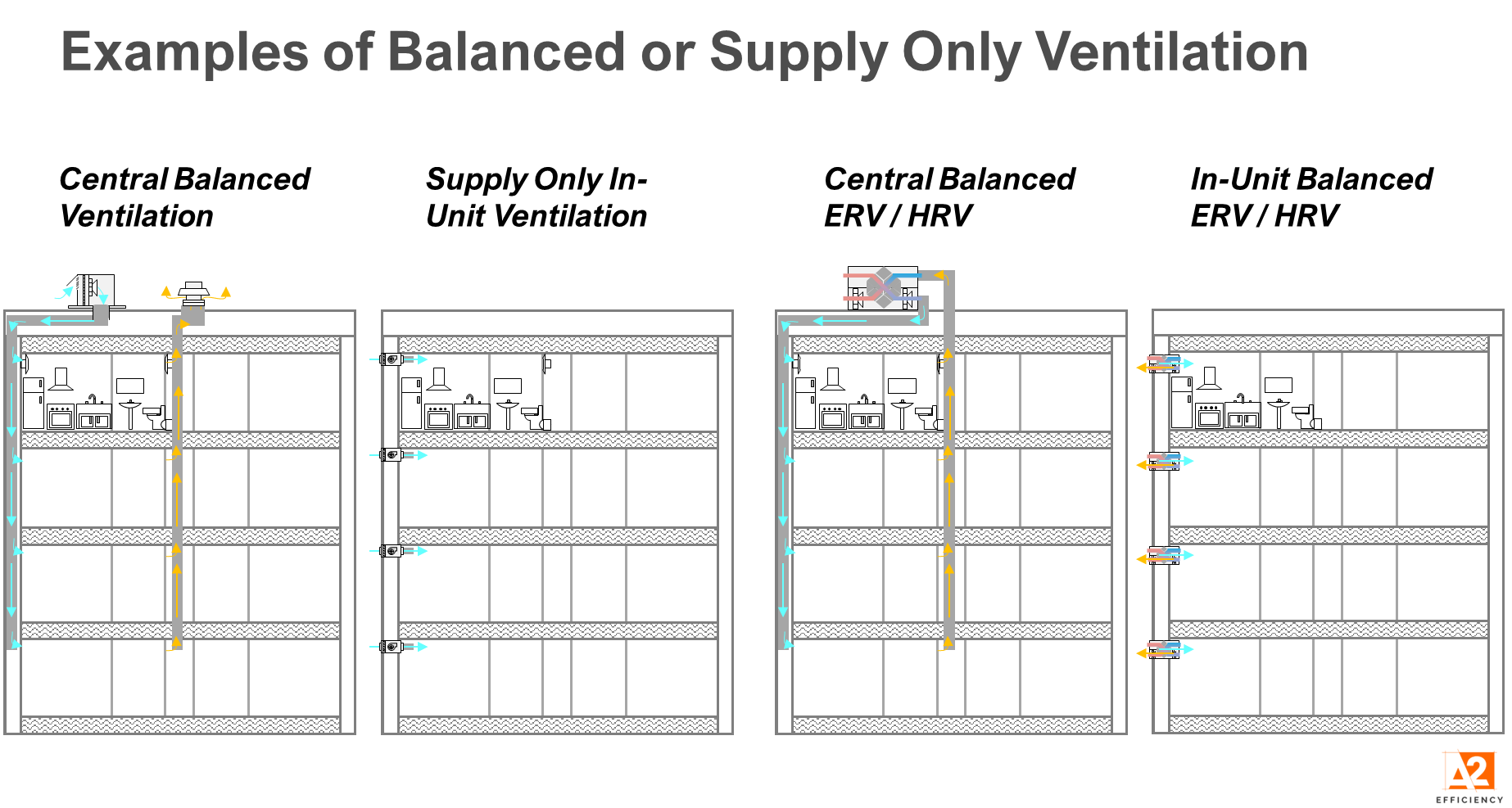
Designers now have more flexibility in system configuration—central ERVs, in-unit systems, or hybrid approaches—but the days of relying solely on exhaust fans are over.
Examples of Balanced or Supply Only Ventilation
Multi-Zone HVAC: All Electric for Offices and Schools
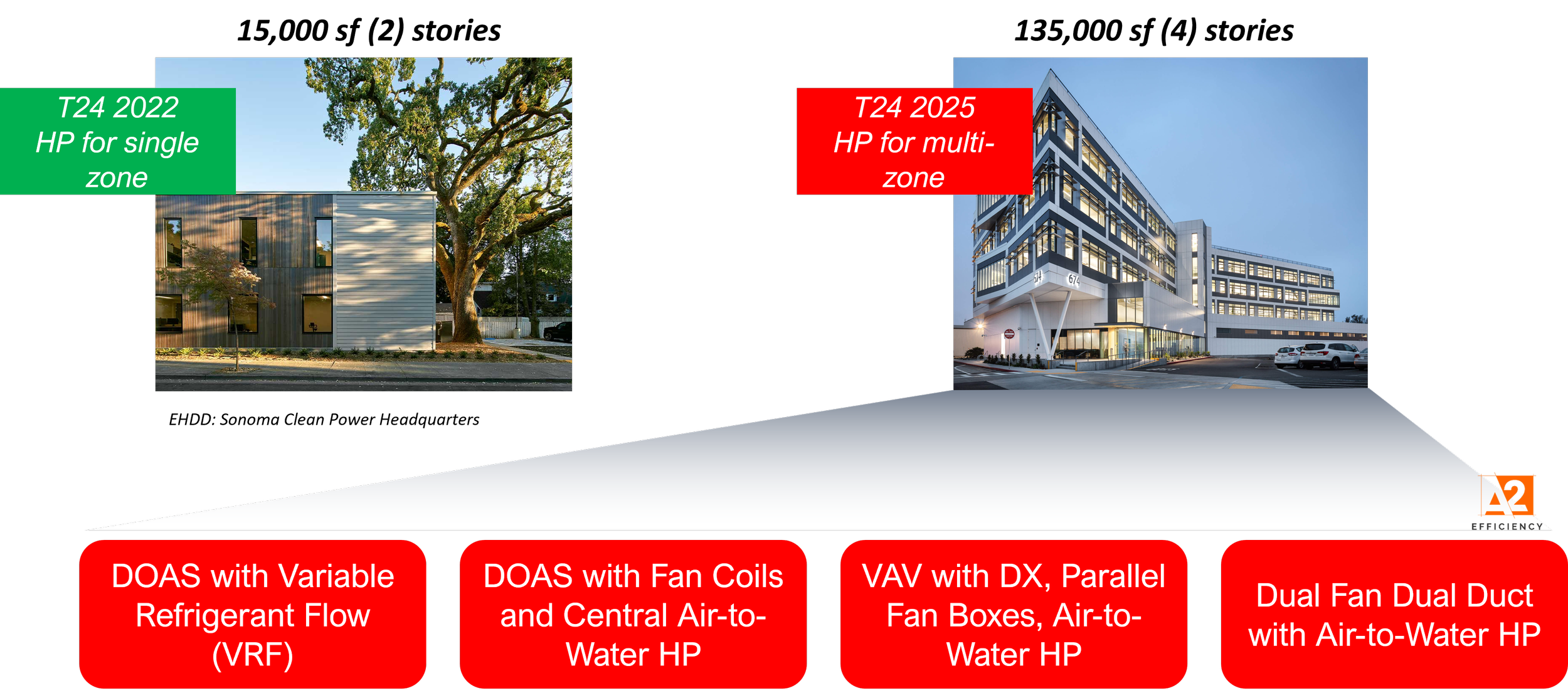
Electrification continues to expand into larger and more complex buildings. For offices and schools under 150,000 square feet or five stories, prescriptive multi-zone HVAC systems must now be heat-pump based. This applies when using the prescriptive compliance pathway and includes systems such as:
DOAS with heat recovery and VRF or Fan Coils
Air-to-water heat pump VAV systems or Dual Duct Dual Fan
The code doesn’t just require electrification—it sets detailed expectations for fan power, controls, heat recovery, and part-load operation. The result is a push toward integrated, higher-performance system design rather than simple fuel switching.
Simultaneous Mechanical Heat Recovery
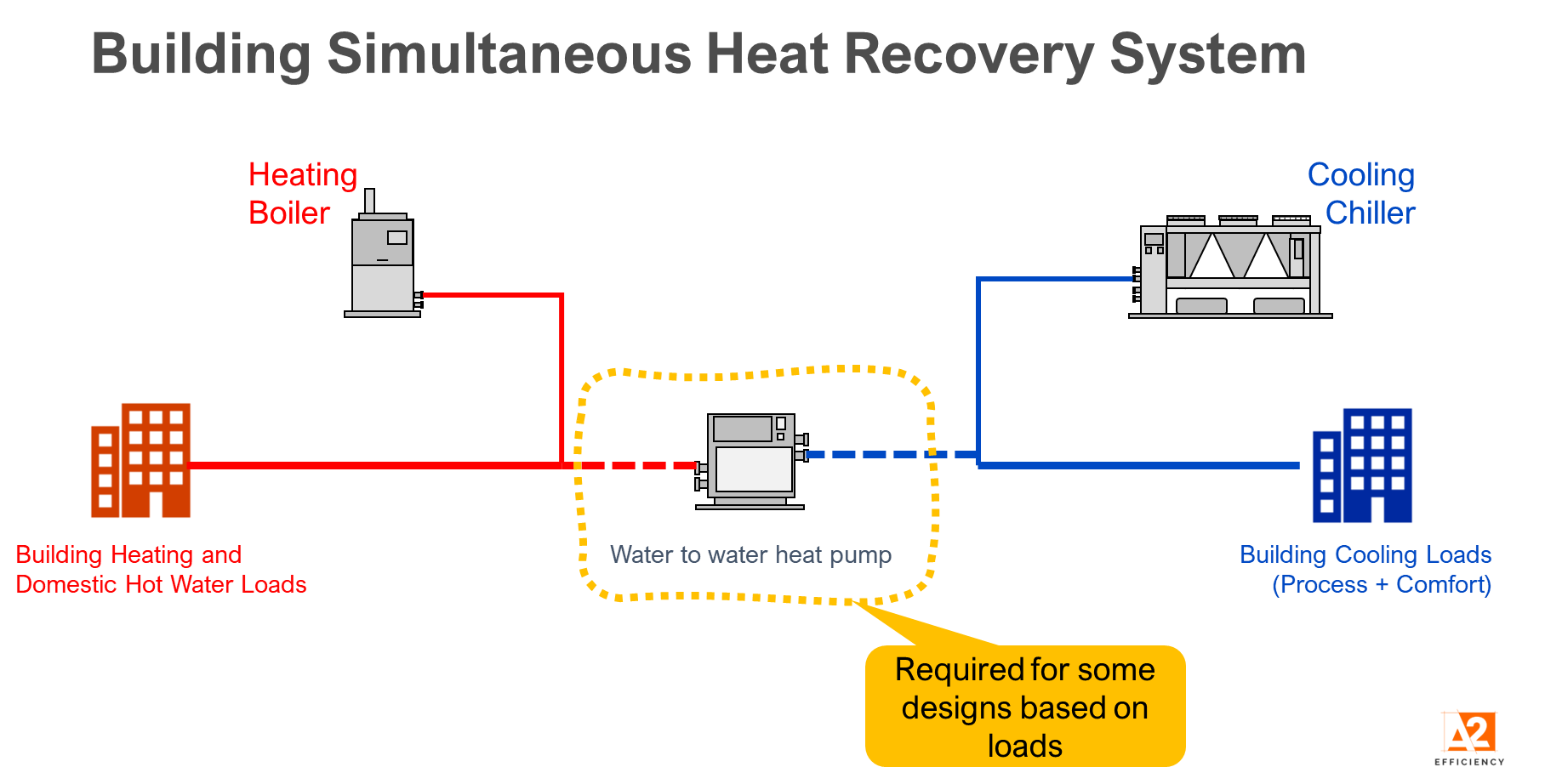
One of the most complex additions to Title 24 2025 is the requirement for simultaneous mechanical heat recovery in certain large buildings. This requirement is capacity-based, not square-footage based. Buildings with overlapping cooling and heating loads—especially those with significant domestic hot water or process cooling—may now be required to recover heat between systems using water-to-water heat pumps or similar technologies.
While the triggers are nuanced, the intent is straightforward: if a building is rejecting heat while simultaneously needing it elsewhere, the code increasingly expects that energy to be reused.
Building Simultaneous Heat Recovery System
Heat Pump Water Heaters in Small Schools
Heat pump water heaters are now prescriptively required in small school buildings:
Less than 25,000 square feet
Fewer than four stories
Located in Climate Zones 2 through 15
This is a notable expansion of HPWH requirements into nonresidential buildings and signals growing confidence in their performance, cost-effectiveness, and readiness for mainstream adoption in institutional settings.
Mandatory Vestibules
Vestibules are now required for more building types, reinforcing the role of the building envelope in energy performance. They are now mandatory (with exceptions) though this applies to most non-residential buildings. This is a simple architectural move with long-term operational benefits, particularly for high-traffic buildings where infiltration losses can quietly undermine efficiency goals.
Space Heating Hot Water Maximum Setpoint
A small line in the code with big implications: Hot water systems used for space heating must be designed for a maximum supply temperature of 130°F.
This requirement applies broadly and supports:
Higher heat pump efficiency
Better condensing boiler performance
Future-ready low-temperature hydronic systems
Rather than mandating specific equipment, the code is shaping systems toward operating conditions that align with decarbonization and long-term flexibility.
Final Thought
Title 24 2025 continues California’s shift away from isolated component efficiencies and toward system-level performance, electrification readiness, and real operational outcomes.
For project teams, the challenge—and opportunity—is understanding how these requirements interact early in design, before they become late-stage constraints.
If you’re working through your first 2025 project, now is the time to revisit assumptions that “worked last cycle”.