Electric Battery Storage Optimized Controls
Battery Storage Controls - 2022
If the compliance software doesn’t model your product accurately, the market signal for adoption is wrong, and your product loses deals it should win.
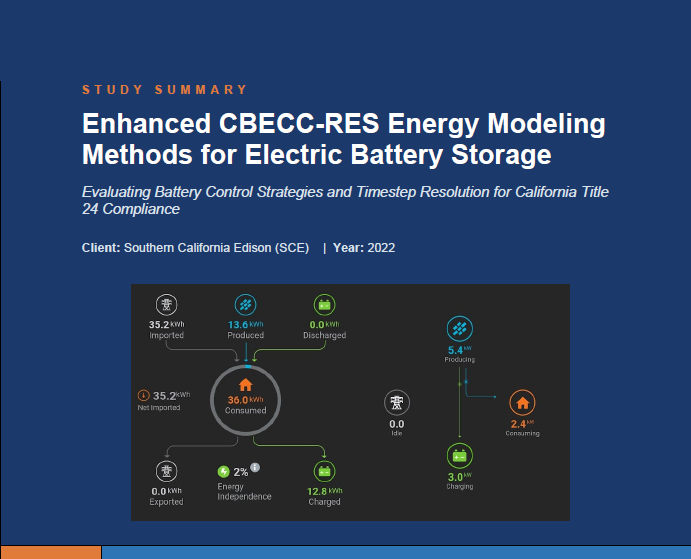
Southern California Edison commissioned this study to evaluate how battery energy storage control strategies are represented in California's Title 24 CBECC-Res compliance software. We tested six distinct control algorithms, compared 15-minute versus 1-hour timestep resolution, and identified where the software systematically understates or mischaracterizes real-world battery performance.
Five specific recommendations were delivered to the California Energy Commission, directly informing how battery products are evaluated in the state's building energy code, and leveling the playing field for storage technologies that outperform what the software was crediting them for.
CBECC-RES • 6 Battery Control Strategies • 15 min vs 1 hr Timestep Resolution • California Title 24